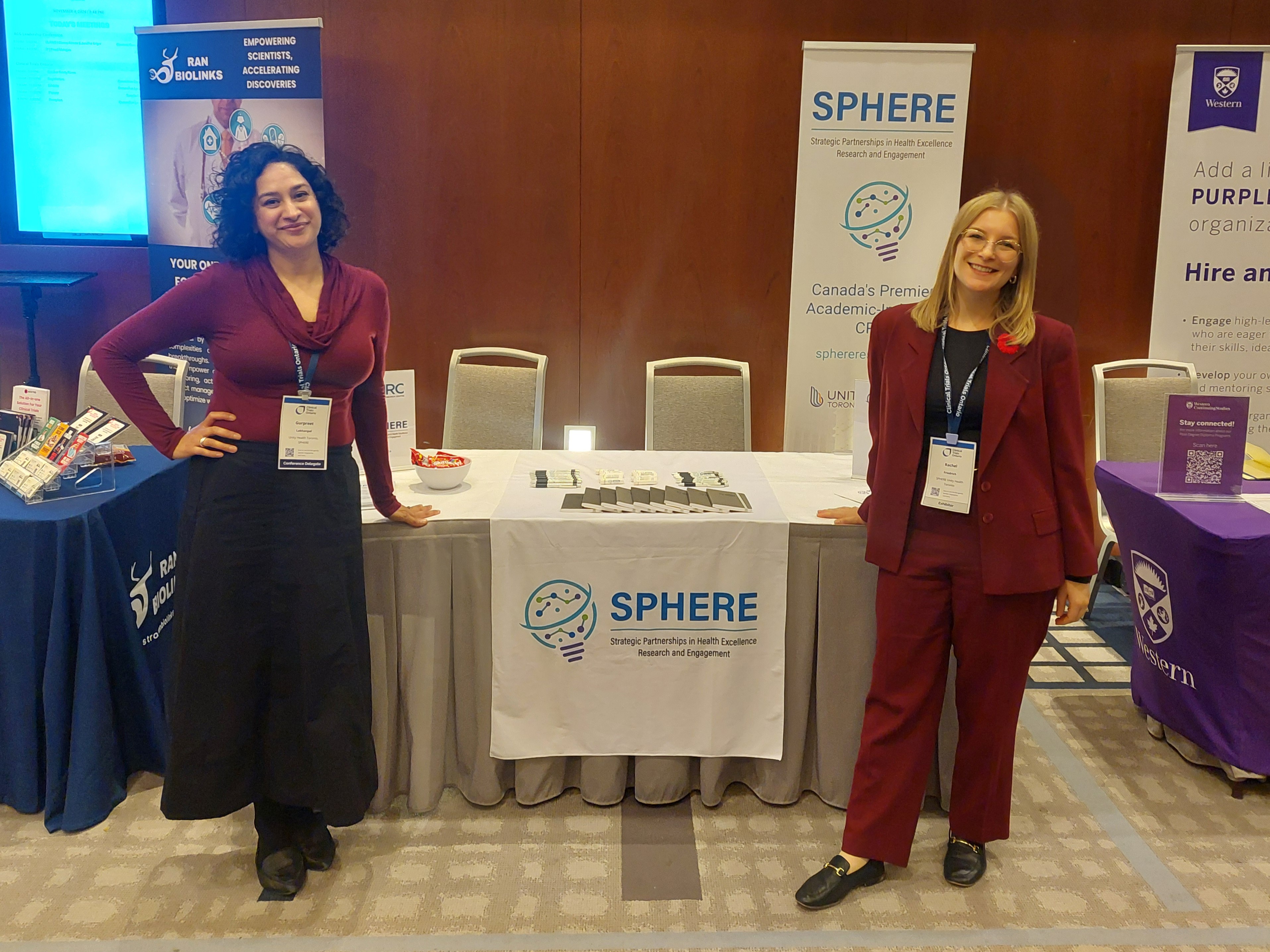



Earlier in November, the SPHERE CRO team had the opportunity to attend the Canadian Clinical Trials Ontario (CTO) Conference, joining researchers, healthcare leaders, industry partners, and clinical trial professionals from across the country to explore the future of clinical research in Canada.
As both exhibitors and attendees, we were pleased to connect with conference participants at our booth in the exhibit hall while also taking part in many of the thought-provoking sessions throughout the event. The conference offered valuable insights into the challenges and opportunities facing the clinical research community, from improving trial access and participant engagement to strengthening Canada's position as a global leader in clinical trials.
Innovation and the Future of Clinical Trials
Many conference sessions focused on how innovation is reshaping the clinical trial landscape. Topics such as decentralized and hybrid trial models, digital technologies, data management, and participant-focused trial design highlighted the ongoing transformation of research operations.
A recurring theme throughout the conference was the need to make clinical trials more accessible and inclusive. Speakers emphasized the importance of reducing barriers to participation, engaging underrepresented populations, and designing studies that better reflect the communities they aim to serve. These discussions align closely with SPHERE's commitment to supporting high-quality clinical research through our work in Qualitative Research and Patient Engagement that focuses on participant-centered study delivery.
Improving access to clinical research is not only about who can participate, but how quickly studies can begin. This was another important theme of the CTO conference: the speed of activating clinical trials and bringing trials to patients faster than what has previously been possible. We share this commitment to improving study activation timelines and are actively making it a reality through Unity Health’s Preferred Partnership Model. SPHERE supports the site and performance management activities of this model that expedites study start-up and site activation, shortening typical clinical trial start-up timelines from an average of 6-12 months to 45 calendar days or less.
Strengthening Canada's Clinical Research Ecosystem
The conference also highlighted Canada's growing opportunity to attract and lead more clinical research. Sessions explored strategies for improving competitiveness, streamlining processes, and fostering greater collaboration between healthcare institutions, researchers, sponsors, and policymakers.
As demand for clinical research continues to grow, successful trial delivery will depend on strong partnerships and a shared commitment to innovation, quality, and efficiency. Events like the CTO Conference play an important role in bringing together diverse perspectives and creating opportunities for meaningful dialogue about the future of research in Canada.
For SPHERE, the conference served as both a valuable learning experience and an opportunity to showcase how integrated clinical research services can help support sponsors, investigators, and healthcare organizations in achieving their research goals.
Looking Ahead
We left the conference energized by the ideas shared and encouraged by the collective commitment to advancing clinical trials across Canada. We are grateful to everyone who stopped by our booth, shared their experiences, and contributed to the many engaging conversations throughout the event.
As the clinical research landscape continues to evolve, SPHERE remains committed to supporting innovative, efficient, and patient-focused clinical trials that help bring new therapies and solutions to the people who need them most.
Key Takeaways
- Collaboration remains essential to addressing the operational and strategic challenges facing clinical research today.
- Patient-centered, inclusive trial design remains a top priority, while digital innovation and evolving trial models are opening new ways to make trials more efficient and accessible.
- Improving study activation is critical to expanding access to clinical research, and faster start-up timelines help bring trials and new therapies to patients sooner.
- Flexible clinical trial models are becoming increasingly important in a rapidly evolving research landscape.
- Strong partnerships between clinical research sites, industry sponsors, and CROs are essential to advancing clinical research in Canada.